How to Choose a Gym in Dhaka: 8 Things to Check
Pick a gym you can reach in about 20 minutes at your training hour, open when you are free and not packed then. Check trainers, hygiene, AC and full fees, and try it first.
Start with three full-body sessions a week: legs, push, pull and core, two or three sets each, adding a little weight or reps every week. At a gym or at home.
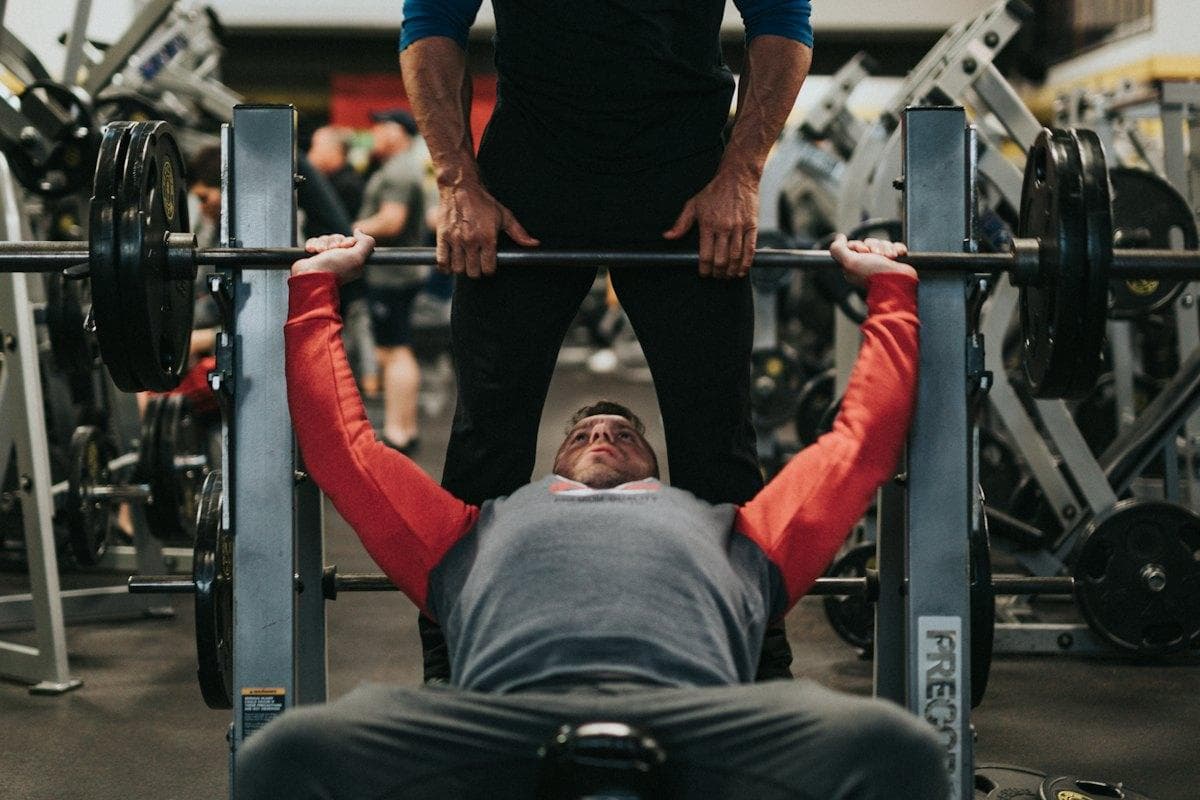
A good beginner workout plan is three full-body sessions a week, each 45–60 minutes, with a rest day between them. Do one exercise for legs, push, pull and core, two or three sets each, and add a little weight or a few reps every week. The same plan works at a gym or at home with bodyweight.
This guide gives you both versions in tables, plus the warm-up, rest and progression rules that make them work. It is general information, not medical advice. If you have a health condition, an injury or you are pregnant, talk to a doctor before you start.
Adults need about 150 minutes of moderate activity a week and muscle-strengthening work on at least two days. That is the WHO recommendation for adults aged 18–64, and the plan below covers the strength part with three sessions and leaves room for walking or cycling on other days.
You do not need to train six days to see progress. The American College of Sports Medicine's 2026 update on resistance training says any regular strength training beats none, and that bands, bodyweight and home routines work too (ACSM, March 2026). The plan you keep doing matters more than the clever one.
Most beginners do better with three full sessions a week they actually attend than six they skip.
a certified personal trainer in Dhaka
If you want someone to check your form, GymCity lists 45 personal trainers in Dhaka as of 8 October 2026. You can compare trainers and send a request from their profile.
Start with three days. It gives each muscle about 48 hours to recover, fits around office hours and Dhaka traffic, and is easy to restart after a missed week. Move to four or five days only after two or three months of steady training.
| Plan | How it is split | Who it suits |
|---|---|---|
| 3-day | Full body on Sunday, Tuesday, Thursday (or any three days with a gap) | Most beginners, busy weeks, Ramadan |
| 4-day | Upper body / lower body, twice each | After 2–3 months of regular training |
| 5-day | Upper, lower, rest, push, pull, legs; or 3 strength days + 2 cardio days | People with time and good recovery |
A five-day plan is not "better". It only helps if you sleep well, eat enough and still feel fresh. If you are sore and tired all the time, go back to three days.
This plan uses common machines and free weights found in most Dhaka gyms. Do Day A and Day B in turn: week one is A, B, A; week two is B, A, B. Rest 60–90 seconds between sets.
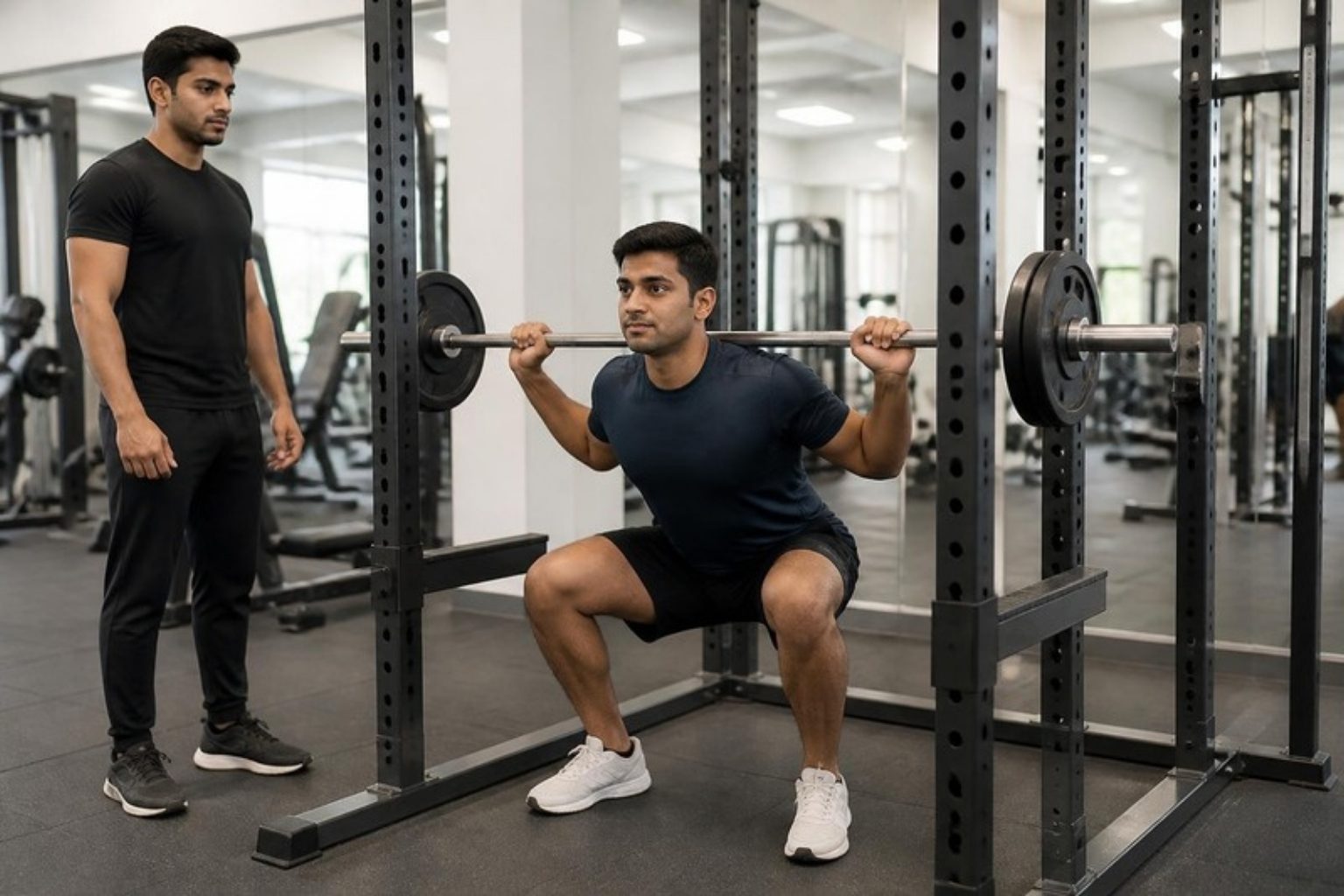
| Exercise | Day A | Day B |
|---|---|---|
| Legs | Goblet squat, 3 × 10 | Leg press, 3 × 10–12 |
| Hips and back of legs | Romanian deadlift with dumbbells, 3 × 10 | Glute bridge, 3 × 12 |
| Push | Dumbbell bench press, 3 × 10 | Seated shoulder press, 3 × 10 |
| Pull | Lat pulldown, 3 × 10–12 | Seated cable row, 3 × 10–12 |
| Single leg | Step-ups, 2 × 8 each leg | Walking lunges, 2 × 8 each leg |
| Core | Plank, 3 × 20–30 seconds | Dead bug, 3 × 8 each side |
| Cardio (optional) | 10 minutes on the bike or treadmill | 10 minutes on the bike or treadmill |
Pick a weight you can lift for the set with two or three reps left in reserve. You should finish the last rep with good form, not grinding. Write down every weight; your notebook is the plan's memory.
The home plan uses the same pattern with bodyweight: legs, hips, push, pull and core. It is a simple calisthenics workout plan and fits in a bedroom or on a rooftop. You need a mat, a sturdy chair and a backpack you can fill with books for extra weight later.
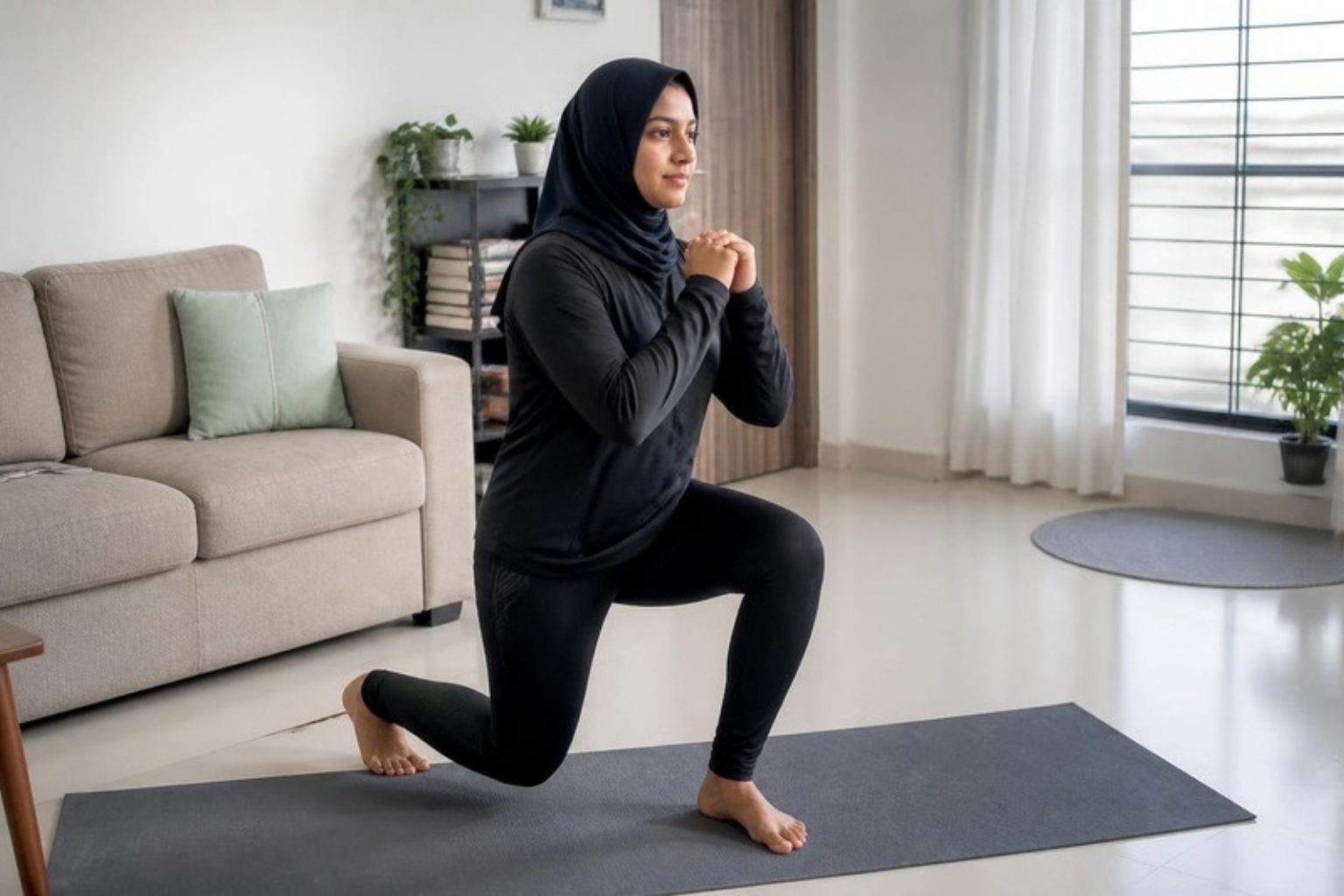
| Exercise | Day A | Day B |
|---|---|---|
| Legs | Bodyweight squat, 3 × 12–15 | Chair sit-to-stand, slow, 3 × 12 |
| Hips | Glute bridge, 3 × 15 | Single-leg glute bridge, 3 × 8 each leg |
| Push | Incline push-up on a table or bed, 3 × 8–12 | Knee or full push-up, 3 × 6–10 |
| Pull | Backpack row, 3 × 12 | Towel row on a door frame or table row, 3 × 8–10 |
| Single leg | Reverse lunge, 2 × 8 each leg | Split squat holding the chair, 2 × 8 each leg |
| Core | Plank, 3 × 20–30 seconds | Side plank, 2 × 15–20 seconds each side |
| Cardio | 10 minutes of brisk walking or stair climbing | 10 minutes of brisk walking or stair climbing |
Check that any table or door you pull on is stable before you lean your weight on it. In hot months, train in the early morning or after sunset and keep water close by.
Warm up for 5–10 minutes before every session: a few minutes of easy cardio, then moves that copy the workout. A warm body moves better, and the first light sets show you how your joints feel that day.
Progress by adding a little at a time: one or two reps per set, or the smallest weight step your gym has. When you hit the top of the rep range on all sets with good form, raise the weight and drop back to the bottom of the range. This is called progressive overload.
Every fourth to sixth week, take an easier week with lighter weights if you feel run down. You come back stronger, not weaker.
Rest at least one day between full-body sessions and aim for seven or more hours of sleep. Muscles repair and get stronger on rest days, not during the workout. Light walking on rest days is fine and often helps soreness.
Some muscle soreness one to three days after a new exercise is normal. Sharp pain, pain in a joint, or soreness that gets worse after a week is not. Stop that exercise and get it checked. Our guide to sleep and recovery for gym results covers rest in more detail.
Good form means the target muscle does the work through a full, controlled range of movement. Most beginner injuries come from lifting too heavy too soon, rushing reps or twisting under load.
Tip: Film one set of your squat from the side on your phone. You will spot a rounded back or knees caving in faster than in the mirror.
The same full-body plan works for weight loss, muscle gain and for women. What changes is the food, the cardio and how hard you push the sets, not the exercises themselves.
A personal trainer is worth it if you are new to free weights, have an old injury, or want a plan built around a goal and your weekly timetable. Even a few sessions to learn the main lifts can save months of guessing.
Trainers and gyms on GymCity build workout plans from their own exercise list and add them to a member's weekly schedule. You see today's workout on your home screen, tick each exercise as you finish, and your trainer sees what you did. Trainers can read how this works on the Workout Plans feature page.
Ready to start with help? Find a personal trainer near you, compare their packages and send a request.
See a doctor before starting if you have heart disease, high blood pressure, diabetes, a recent injury or surgery, or if you are pregnant. Stop and get help if you feel chest pain, severe breathlessness, dizziness or faintness during exercise.
Pick a gym you can reach in about 20 minutes at your training hour, open when you are free and not packed then. Check trainers, hygiene, AC and full fees, and try it first.
Most Dhaka gyms charge ৳2,500–৳4,500 a month plus a one-time admission fee. Area, AC, facilities and trainers explain the gap between cheap and premium gyms.
Start with 8–10 simple poses like Cat-Cow, Child's Pose and Bridge, held for a few slow breaths. Practise 15 minutes, three or four times a week, without pain.
Search by area, activity or name, then compare fees, timings and reviews.